Troponin T and Emergency Echocardiography: A Combined Approach for Early Diagnosis of Cardiac Emergencies
DOI:
https://doi.org/10.5530/ctbp.2026.2s.6Keywords:
Troponin T (TnT), two-dimensional echocardiography (2D Echo), stratification, cardiac emergencies, prognoses, revascularizations, mortalityAbstract
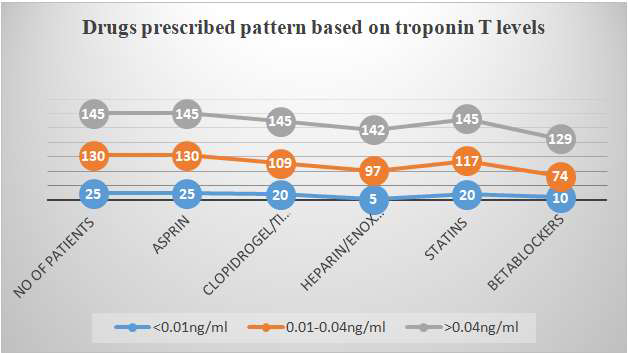
The cardiovascular diseases (CVDs) are the world's leading cause of death and the consequences of a delayed diagnosis are frequently worse the patient conditions. This observational study identified how early detection and risk stratification in cardiac emergencies can be enhanced by diagnosing with combined cardiac Troponin T (TnT) testing with two-dimensional echocardiography (2D Echo). 300 patients with acute cardiac symptoms were assessed over the course of 6 months in a tertiary care hospital in Guntur, India. Within 3 hours of admission, all received standard emergency care along with TnT testing and 2D Echo. TnT and 2D Echo each demonstrated a greater diagnostic accuracy (82.0% and 81.3%), but when combined together, the result achieved 92.7%, lowering false positives and negatives greatly. While patients with both tests negative had excellent prognoses, those with both tests positive had the worst clinical outcomes compared to only one test, including longer hospital stays, more ICU admissions, more revascularizations, and higher mortality. The complementary nature of these modalities was further supported by the strong correlation found between elevated TnT levels and regional wall motion abnormalities on Echo. With more intensive therapy in high-risk patients identified by combined diagnostics, treatment patterns mirrored guidelines-based care. Only a small percentage of adverse drug reactions required treatment withdrawal, and most were controllable. According to our study, combining TnT and 2D Echo in emergency facilitates faster, more precise diagnosis for cardiovascular emergencies, aids in improved triage choices, and directs customized treatment, all of which improve quality of life of patients. Global emergency management of CVDs could be improved by the widespread use of this dualmodality approach.