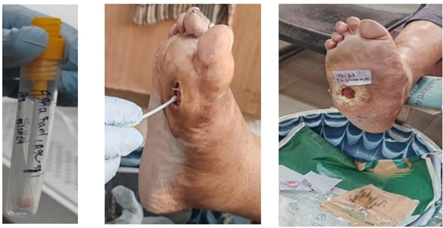
Screening of Biofilm forming Bacterial Isolates from Chronic Leprosy Foot Ulcers
DOI:
https://doi.org/10.5530/ctbp.2026.2.21Keywords:
Leprosy, Foot ulcers, Biofilms, secondary bacterial pathogens, Congo Red Agar, Microtiter Plate assayAbstract
Leprosy, a chronic infectious disease caused by Mycobacterium leprae, often leads to severe complications such as chronic foot ulcers due to nerve damage and loss of protective sensation. These ulcers are frequently colonized by secondary bacterial pathogens, further delaying wound healing. One of the major challenges in treating these ulcers is the presence of biofilm-forming bacteria, which protect microbes from antibiotics and the host immune System, making infections persistent and difficult to eradicate. This study was conducted to isolate bacterial species from chronic leprosy foot ulcers and evaluate their biofilm-forming abilities. Swab samples were collected from ulcer sites of leprosy patients and cultured on selective media. The bacterial isolates were identified through standard cultural, morphological, and biochemical methods. Biofilm production was assessed using Congo Red Agar (CRA) and the Microtiter Plate (MTP) assay. Among the isolates, Staphylococcus aureus was the most predominant species, followed by Pseudomonas spp., Klebsiella spp., and Escherichia coli. A significant proportion of these isolates exhibited strong biofilm-forming ability, particularly Staphylococcus aureus. The findings emphasize the importance of early detection of biofilm-producing bacteria in chronic leprosy ulcers to guide appropriate antimicrobial therapy, reduce complications, and improve patient outcomes.