Heavy metal contamination in water matrices its ecotoxicology and adsorption based removal strategies
DOI:
https://doi.org/10.5530/ctbp.2025.4s.29Keywords:
Heavy Metals, Ecotoxicology, Adsorbents, Adsorption, wastewater treatmentAbstract
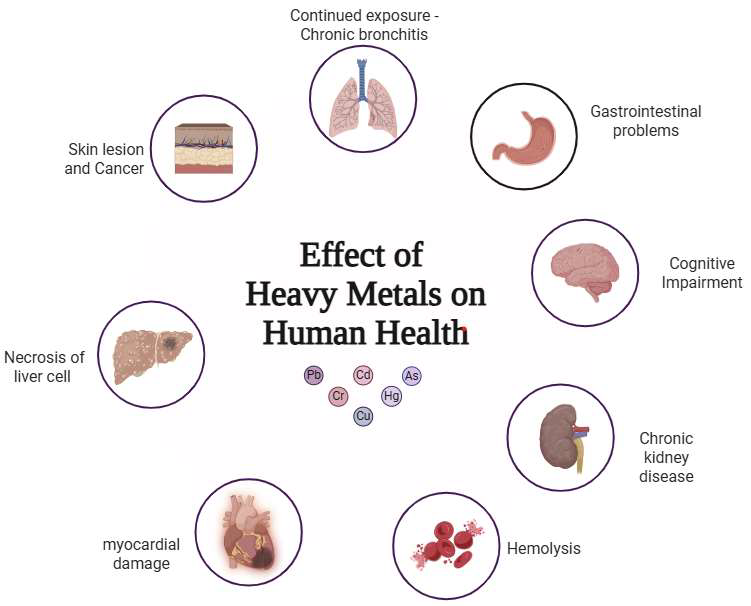
Global wastewater generation and its total pollutant load are rising due to population expansion, faster urbanisation, and economic development. Heavy metals, toxic in low concentrations and possessing a low level of degradability, are considered more persistent and pose more detrimental effects on the water matrices than other pollutants. Its bioaccumulation and ecotoxicological effects increase toxicity for humans and marine biota. Hence, it's imperative to remove heavy metals from water. Various methods have been discussed for removing heavy metals from water based on their advantages and disadvantages. Adsorption-based removal strategies are widely used due to their consistently enhanced removal effectiveness, decreased costs, and ease and simplicity in developing innovative adsorbents. In this study, the adsorption capacity of different adsorbents in the removal of heavy metals has been discussed. Mechanisms involving the removal of heavy metals from water by diverse adsorbent materials were also summarised.