Surgical Margins and Clinicopathological Determinants of Oncologic Outcomes in Pelvic Tumour Hemipelvectomy: A Single-Centre Retrospective Review
DOI:
https://doi.org/10.5530/ctbp.2025.4s.7Keywords:
Clinicopathological Factors, Musculoskeletal Oncology, Pelvic Surgery, Prognosis, Wide ResectionAbstract
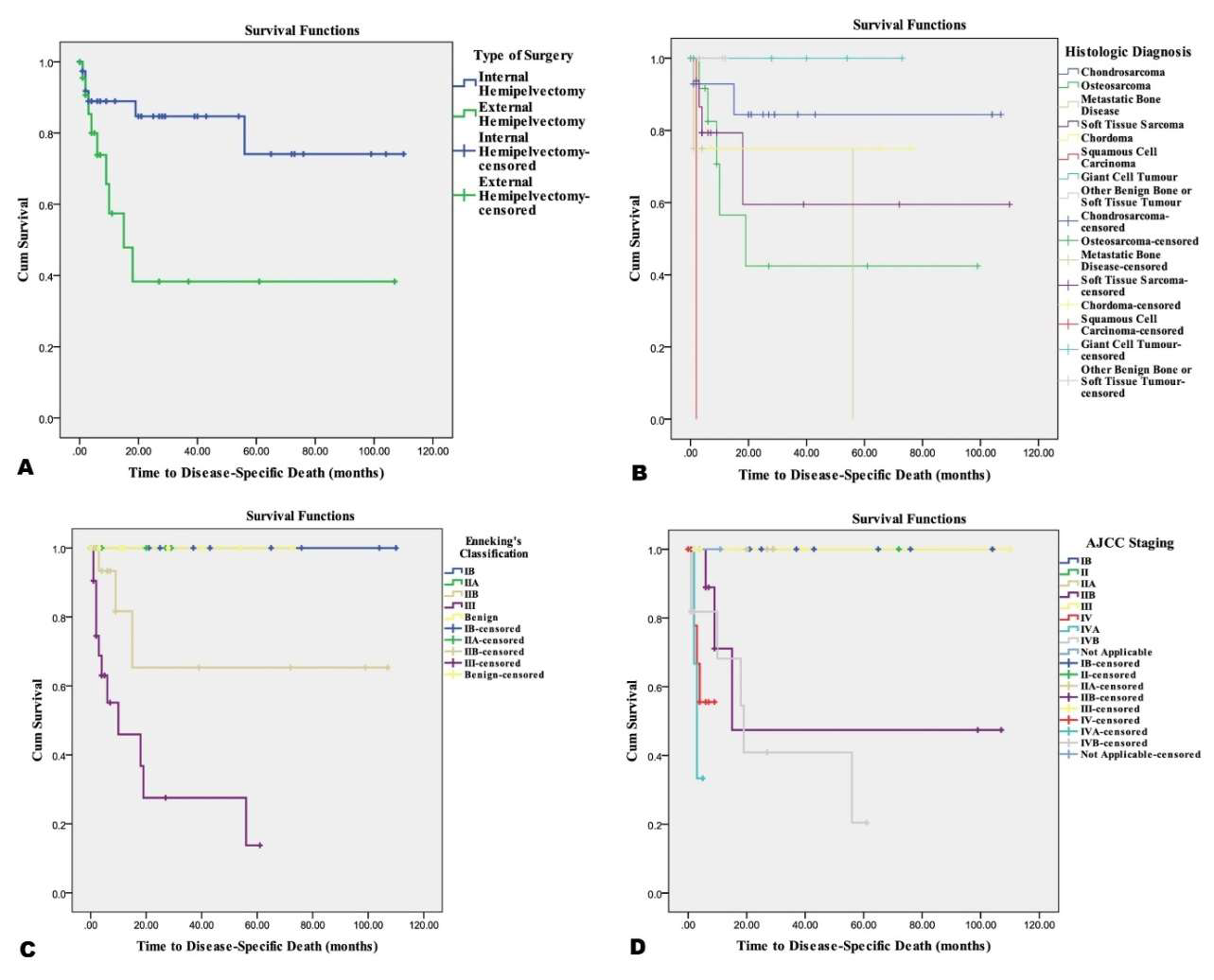
Introduction: Hemipelvectomy is a complex surgical procedure used to manage primary and metastatic pelvic tumours. Achieving safe surgical margins in pelvic tumour resections remains a major challenge due to anatomical complexity and late presentation. This study evaluated the accuracy of surgical margins, associated clinicopathological factors, and their implications on oncologic outcomes following hemipelvectomy. Materials and Methods: A retrospective review of 64 patients who underwent internal or external hemipelvectomy for pelvic tumours at a single referral centrewas conducted. Data on tumour type, volume, stage, resection type, and margin status were analysed. Oncologic outcomes assessed included local recurrence, distant metastasis, and disease-specific mortality. Tumours were staged using Enneking and American Joint Committee on Cancer(AJCC) systems, and margin status was classified histologically. Statistical analyses included Kaplan-Meier survival estimates and Cox regression. Results: The mean age was 39.8 years (range 8–79). Most tumours were primary (76.6%), with chondrosarcoma and osteosarcoma being the most common. Internal hemipelvectomy was performed in 64.1% of patients. Wide resection was attempted in 37 cases, of which 14 (37.8%) resulted in positive microscopic margins. Positive margins were significantly associated with tumour volume, stage, surgical type, and resection subtype. Contaminated wide margins had a higher positivity rate (56.3%). Positive margins correlated with higher recurrence rates but paradoxically showed lower disease-specific mortality, possibly due to adjuvant therapy or selection bias. Internal hemipelvectomy was associated with better disease-specific survival. Conclusion: Multiple clinicopathological factors influence surgical margin status and oncologic outcomes. While positive margins were linked to recurrence, they were not independently predictive of mortality. The probability of achieving a clear margin was low, highlighting the need for meticulous surgical planning. Internal hemipelvectomy offers favourable survival outcomes when performed with appropriate patient selection.